Most people fly into Marrakech, do three days of souks and rooftop tagines, and call it Morocco. They've barely scratched it. The real country lives in the blue alleys of Chefchaouen, the medieval maze of Fes, the silence of the dunes at dawn, and the switchback roads over the High Atlas.
Morocco co-hosts the 2026 World Cup with Spain and Portugal, and football fever runs deep here — the Atlas Lions' run to the 2022 semifinals is still talked about over mint tea. But honestly, this is an evergreen trip. Come whenever; the country rewards anyone willing to wander past the postcard.
When to Go
Morocco is a country of microclimates, so timing depends on your route.
- March–May: The sweet spot. Wildflowers in the Atlas, comfortable medina temperatures, manageable desert heat.
- September–November: My personal favorite. Summer crowds gone, dates fresh in the south, and the light is gorgeous.
- June–August: Inland cities like Fes and Marrakech roast (often 38–42°C). The coast — Essaouira, Tangier — stays breezy. The Sahara at midday is brutal; go for sunrise and sunset only.
- December–February: Cold nights, snow on the Atlas, but the desert is crisp and clear. Pack layers.
 Photo: Buğra / Pexels
Where to Stay
Fes — The cultural heart and the most intact medieval city in the Arab world. Stay inside Fes el-Bali (the old medina) in a restored riad — courtyard houses that are an experience in themselves. Budget riads run 250–450 MAD/night ($25–45); a beautiful mid-range one 600–1,000 MAD ($60–100). Get a map offline; the medina has 9,000-plus alleys and you will get lost.
Chefchaouen — The blue town in the Rif Mountains. Smaller, cooler, slower. Base yourself near Plaza Uta el-Hammam but a few streets up for quiet. Guesthouses run 200–400 MAD (~$20–40). Two nights is plenty.
Merzouga / Erg Chebbi (Sahara) — For the dunes. Skip the day trips; sleep in a desert camp. Standard camps run 400–700 MAD per person ($40–70) including dinner, breakfast, and a camel ride; luxury "glamping" climbs to 1,500+ MAD ($150+).
What to Eat
- Tagine — Slow-cooked stew named for the conical clay pot. Lamb with prunes, or chicken with preserved lemon and olives. 50–80 MAD (~$5–8) in a local spot.
- Couscous — Traditionally a Friday meal. If a family invites you for Friday couscous, say yes.
- Pastilla — A sweet-savory pie of pigeon (or chicken) under crackly pastry dusted with cinnamon and sugar. Sounds strange, tastes incredible.
- Harira — Tomato-lentil soup, especially good during Ramadan evenings.
Cheap-eat tip: Find a hole-in-the-wall doing bowls of bissara (fava bean soup) for breakfast — 10–15 MAD (~$1–1.50), drizzled with olive oil and cumin. Locals' fuel.
 Photo: Diji Aderogba / Pexels
Don't-Miss Spots
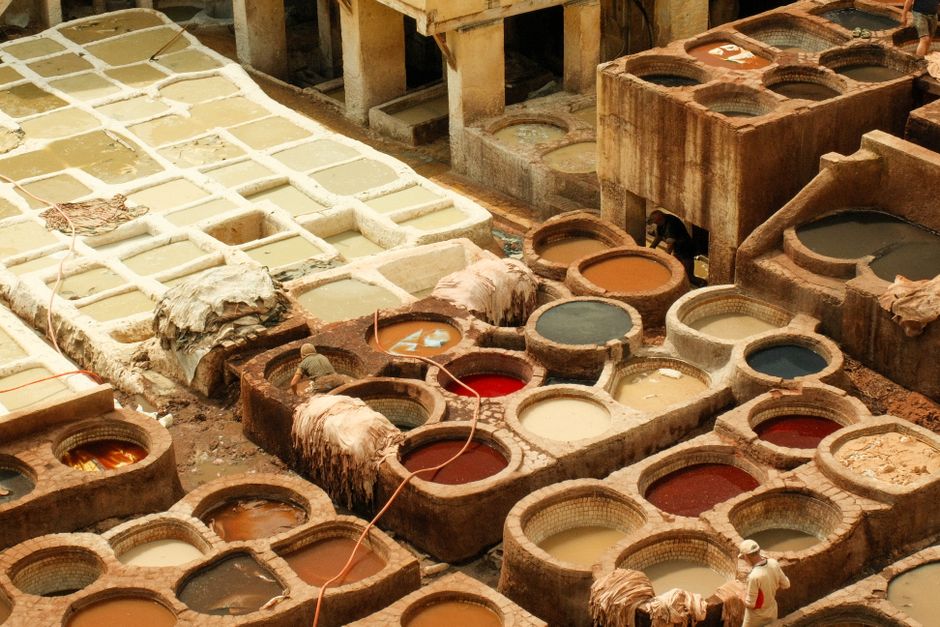
- The Fes tanneries (Chouara) — Centuries-old leather dyeing pits. Vendors hand you mint sprigs for the smell. Go to a terrace, look, then politely leave if you don't want leather.
- Aït Benhaddou — The fortified mud-brick ksar you've seen in countless films, on the road between Marrakech and the desert.
- The High Atlas — Drive or trek the Tizi n'Tichka pass, or base in the Ourika Valley or Imlil for day hikes toward Mount Toubkal.
- Hidden gem: Moulay Idriss, a whitewashed holy town in the hills near the Roman ruins of Volubilis. Few foreigners stay overnight; do, and you'll have the place to yourself at sunset.
Getting Around
- Trains (ONCF) connect Tangier, Fes, Rabat, Casablanca, and Marrakech, and they're comfortable and cheap. Fes–Marrakech is around 200 MAD (~$20) in first class. The high-speed Al Boraq (Tangier–Casablanca) is genuinely fast.
- CTM and Supratours buses reach everywhere trains don't, including the desert gateways. Book the day before in high season.
- Grand taxis (shared old Mercedes) run fixed routes between towns — cheap but cramped (six passengers). Agree the price first.
- Renting a car is the move for the Atlas and the south. Roughly 350–500 MAD/day (~$35–50). Roads are good but mountain passes are slow and winding.
Skip self-driving in city medinas — cars don't fit. Park outside and walk.
What a Week Costs
Rough per-person daily budgets (excluding international flights):
| Style | Per day | Per week |
|---|---|---|
| Budget (hostels, street food, buses) | $30–45 | ~$210–315 |
| Mid-range (riads, sit-down meals, some private transport) | $70–110 | ~$490–770 |
| Comfort (boutique riads, desert luxury camp, drivers) | $160+ | ~$1,120+ |
A desert excursion, a good guide in Fes, and souvenirs are the line items that blow budgets. Haggle in souks — start around 40% of the asking price and meet in the middle.
Plan Your Morocco Trip
Morocco rewards a smart route more than almost anywhere — the difference between a frustrating week and a magical one is sequencing your cities, desert, and mountain days right. If you'd rather not piece it together from scattered blog posts, we build done-for-you custom itineraries starting from $2 — your dates, your pace, the riads and drivers already sorted. Tell us what you're dreaming of and we'll map it.
Photos via Pexels.