Australia messes with your sense of scale. It looks like one country on a map and behaves like a dozen — a four-hour flight separates Sydney from Perth, and the middle is mostly red, empty, and astonishing. The trick is to stop trying to "see Australia" and pick a coast, a city, and one big-ticket landscape.
The Socceroos punch above their weight, and after co-hosting the 2023 Women's World Cup, Australia's football fever is real and rising heading into 2026. But this is an evergreen, outdoorsy place — you come for the reef, the coffee, the beaches, and the easy, sunburnt good humor of the locals.
When to Go
Seasons are flipped, and the country spans the tropics to the temperate south, so "best time" depends on where you land.
- September–November (spring) and March–May (autumn): The all-rounder sweet spots — warm coasts, fewer crowds, fairer prices.
- December–February (summer): Beach peak in the south, but expensive and packed; the Top End (Darwin, Cairns) is in its hot, wet, stinger season — skip the tropics then.
- June–August (winter): Cool in the south but the dry season up north, which is exactly when you want to do the reef, Kakadu, and the Outback.
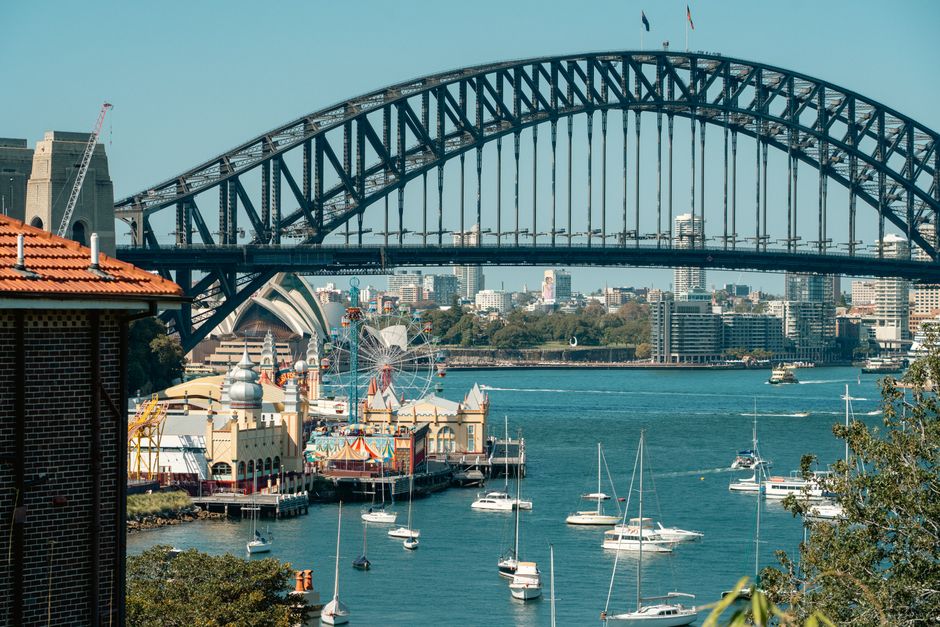 Photo: Donovan Kelly / Pexels
Where to Stay
Sydney — Skip the overpriced Circular Quay hotels and base in Surry Hills (food, bars, walkable) or Bondi/Coogee if you want the beach-suburb life. Hostels run A$45–70/night ($30–47); mid-range hotels A$180–320 ($120–215).
Melbourne — Australia's coffee-and-culture capital. Stay in Fitzroy or Carlton for laneway cafes and live music, or the CBD for tram convenience. Hotels A$160–280 (~$107–187).
Cairns — Your launchpad for the Great Barrier Reef. The town itself is functional, not beautiful; stay near the Esplanade lagoon. Mid-range hotels A$140–240 (~$94–160).
What to Eat
- Meat pie — the honest national snack, best from a bakery, not a servo.
- Barramundi — the go-to local fish, grilled simply.
- Fresh oysters and prawns — the Sydney Fish Market is a pilgrimage.
- Lamington and Tim Tams — sweet, iconic, get them out of your system.
- A proper flat white — Melbourne invented the coffee snob; lean in.
Cheap-eat tip: Australia eats expensively, so chase food courts in Asian districts — Melbourne's Chinatown or Sydney's Haymarket do laksa, banh mi, and dumplings for A$12–18 ($8–12). And many pubs do a famous "parma" (chicken parmigiana) night for around A$20 ($13).
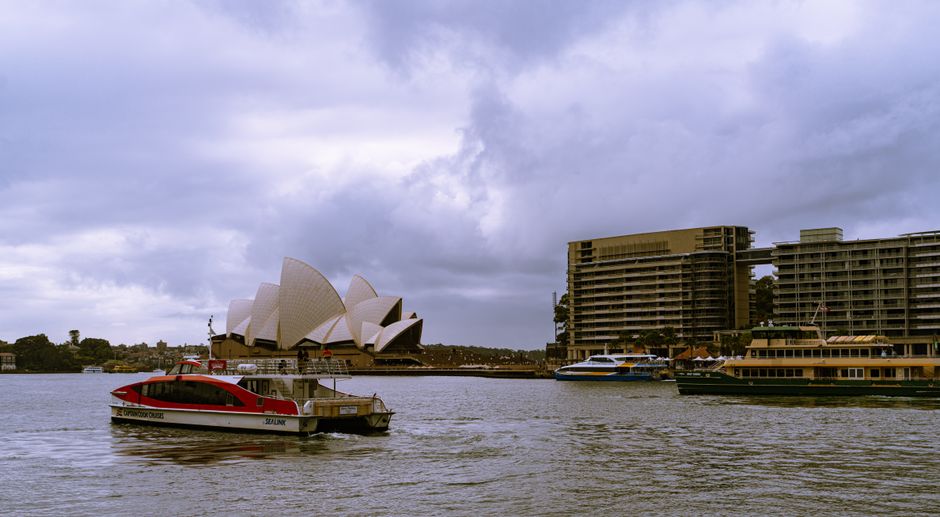 Photo: Khoi Pham / Pexels
Don't-Miss Spots
- Sydney Opera House & Harbour Bridge — do the Bondi-to-Coogee coastal walk instead of just photographing the icons.
- Great Barrier Reef — snorkel or dive the outer reef out of Cairns, not the closer, faded patches.
- Great Ocean Road — a Melbourne road-trip classic ending at the Twelve Apostles.
- Uluru — the red monolith is genuinely moving at sunrise; respect the no-climb rule.
Hidden gem: Tasmania. Most international visitors skip it, which is their loss — MONA (a wildly subversive art museum near Hobart), the empty white-sand beaches of the Bay of Fires, and Cradle Mountain make it the best-value, least-crowded corner of the country.
Getting Around
Distances are the whole game. Fly between regions — domestic carriers (Qantas, Jetstar, Virgin) run frequent routes, and Sydney–Melbourne is one of the busiest air corridors on earth (A$80–180 / ~$53–120 one-way if booked ahead).
- In cities, tap a contactless card straight onto buses, trains, ferries, and Melbourne's free City Circle tram. A typical fare is A$3–5 (~$2–3.50).
- Uber is everywhere and cheaper than taxis.
- For the coast, renting a car (or campervan) is the move — reckon A$60–110/day (~$40–73) plus pricey fuel.
What a Week Costs
Rough per-person daily ranges, mid-range style:
| Item | Budget | Mid-range |
|---|---|---|
| Accommodation | $30–50 | $100–215 |
| Food | $20–35 | $45–80 |
| Transport (local) | $6–12 | $15–35 |
| Activities | $15–40 | $50–150 |
A week, comfortably: roughly $900–1,700 per person, excluding international flights. A reef day trip runs A$220–320 (~$147–215); add ~$80–180 per internal flight.
Plan Your Australia Trip
Australia punishes a bad route harder than almost anywhere — get the flight order wrong and you'll burn days and dollars crossing a continent for nothing. If you'd rather skip the logistics and get a day-by-day plan built around your dates, budget, and whether you're chasing reef, cities, or the Outback, I build custom itineraries starting from $2, with flights, neighborhoods, and the big bookings already lined up so you just show up.
Photos via Pexels.